Sumário do Conteúdo
François René de Chateaubriand stands as a towering figure in French literature, a visionary writer and statesman whose sweeping memoirs and lyrical prose helped define an era.
The Life and Historical Context of François René de Chateaubriand
Born in 1768 in Saint-Malo, Brittany, François René de Chateaubriand grew up amid the political turbulence that would soon engulf France. His aristocratic background and early education provided him with a unique vantage point, allowing him to observe the shifting ideals of the Enlightenment and the convulsions of the Revolution from both inside and outside the country. These early experiences shaped a restless spirit that would later find expression in sweeping narratives and deeply personal reflections.
After traveling to America in his youth, Chateaubriand returned to France just as the Revolution was descending into chaos. His decision to emigrate was driven by both principle and survival, yet this period of exile proved transformative. During these years abroad, he immersed himself in literature and philosophy, laying the intellectual foundations for a new kind of writing that blended intimate emotion with grand historical vision. His return and subsequent involvement in politics only deepened his awareness of the fragile relationship between individual freedom and state power.
Chateaubriand’s Literary Innovations and Style
Chateaubriand is often credited as a pioneer of Romanticism in French literature, introducing a heightened sensitivity to nature, emotion, and the exotic. His prose is marked by lush descriptions, rhythmic cadences, and a deliberate use of contrast between the sublime and the melancholy. By weaving personal experience with philosophical reflection, he created a distinctive voice that influenced generations of writers who followed in his footsteps.
Among his most notable stylistic traits is the carefully modulated sentence, where long, flowing clauses build toward poignant observations about human solitude and spiritual longing. He frequently employs vivid imagery of wild landscapes, ruined abbeys, and distant horizons to evoke a sense of inner turmoil. This fusion of external scenery with internal states became a hallmark of his work, anticipating modern approaches to psychological depth in narrative.
Key Elements of His Style
- Rich, poetic diction that balances formality with emotional sincerity
- Frequent use of parallelism and repetition to reinforce thematic motifs
- Contrasts between light and darkness, memory and immediacy
- An interest in the primitive, the ancient, and the transcendent
Major Works and Their Enduring Influence
At the heart of François René de Chateaubriand’s legacy are works such as Atala, René, and Les Martyrs, which helped crystallize the themes of youthful melancholy, spiritual crisis, and redemptive love. These novellas and poems captured the imagination of European readers, offering a vision of feeling that stood in contrast to the more rigid rationalism of the preceding century. Their popularity cemented his reputation as a leading voice of his time.
His monumental autobiography, Mémoires d’outre-tombe, is perhaps his most ambitious project, a vast reflection on history, memory, and the passage of time. In this work, Chateaubriand examines not only his own life but also the broader trajectory of French society, blending intimate detail with sweeping commentary. The memoirs remain a crucial document for understanding both the author and the intellectual currents of the nineteenth century.
Political Thought and Public Engagement
Beyond literature, François René de Chateaubriand played an active role in French politics, serving in diplomatic posts and engaging in fierce debates about the direction of the nation. His political writings reveal a complex figure, torn between loyalty to tradition and a cautious openness to reform. He often criticized both revolutionary excess and rigid conservatism, advocating for a more nuanced balance between authority and liberty.
His essays and speeches on governance, such as those in De la monarchie selon le mode de l’Angleterre, illustrate his concern with how political institutions shape moral life. Chateaubriand believed that a healthy society required not only strong leadership but also a cultivated public sphere, informed by literature, religion, and a shared sense of history. This vision continues to resonate in discussions about democracy and cultural renewal.
Religious and Philosophical Themes
Spirituality looms large in Chateaubriand’s work, reflecting both his personal struggles and the broader intellectual debates of his era. He oscillated between fervent Catholic belief and a more melancholic awareness of doubt, producing a body of writing that explores faith as both comfort and torment. His treatment of religious themes is never simplistic, often highlighting the tension between ritual and genuine conviction.
Philosophically, he is intrigued by the limits of reason and the enduring power of myth. In works like Itinéraire de Paris à Jérusalem, he juxtapobservation travelogue with meditations on sacred sites and collective memory. This blending of the empirical and the introspective invites readers to consider how belief shapes perception, a question that remains vital in an age of scientific certainty and secular skepticism.
Vídeos Relacionados
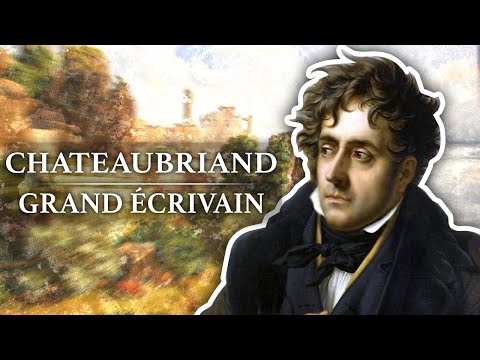
François-René de Chateaubriand - Grand Ecrivain (1768-1848)
Ecrivain illustre pionnier du romantisme français, Chateaubriand était un homme hors du commun qui a marqué des générations ...
Legacy and Contemporary Relevance
Today, François René de Chateaubriand is remembered not only as an innovator of style but also as a thinker who grappled with the central dilemmas of modernity. His exploration of alienation, nostalgia, and the search for meaning speaks to contemporary audiences navigating rapid social change and cultural fragmentation. By foregrounding emotion and the natural world, he offers a counterbalance to purely utilitarian views of literature and life.
Scholars continue to debate the contradictions within his career, yet there is broad agreement on his influence across disciplines. From philosophy to political theory, his work invites reflection on how personal experience intersects with historical forces. In an era of noise and haste, revisiting Chateaubriand encourages a slower, more attentive engagement with the inner landscapes that shape our shared world.
In conclusion, François René de Chateaubriand remains a vital presence in the history of ideas, a writer whose lyrical intensity and intellectual breadth continue to inspire curiosity and debate. His works invite us to linger on the margins between passion and reason, memory and imagination, offering timeless insights into the human condition.
