Sumário do Conteúdo
- What is the verbo to be present
- Forms of the verb to be in the present
- Common contractions with the verbo to be present
- Negative forms of the verb to be in the present
- Short answers with the verbo to be present
- Using the verbo to be present to describe states and feelings
- Location, time, and identification with the verbo to be present
- Practice and consistency with the verbo to be present
- Conclusion
Understanding the verbo to be present is essential for anyone who wants to speak and write English with confidence and clarity.
What is the verbo to be present
The verbo to be present is one of the most fundamental verbs in English, serving as the primary link between the subject and information about it. In the present, it takes different forms such as am, is, and are, depending on the subject and context. Grasping how these forms work is the first step toward building correct sentences in both speaking and writing. Unlike many other verbs, the verb to be is irregular and does not follow a standard pattern, which makes practice and exposure especially important.
In everyday communication, the verbo to be present allows you to describe states, emotions, locations, and identities in the here and now. You use it to say where someone is, how they feel, or what their role in a situation might be. Because it appears so frequently, mastering this verb gives your English a natural rhythm and helps you avoid common mistakes. Over time, you will notice that it becomes an intuitive part of your sentence construction.
Forms of the verb to be in the present
To use the verbo to be present correctly, you need to know its main forms and who they typically accompany. I takes am, as in I am ready, while you, we, and they use are, as in You are late or They are friends. Meanwhile, he, she, and it use is, as in She is careful or It is raining. Paying attention to these distinctions helps your sentences sound accurate and polished.
Here are some quick tips to remember the forms of the verbo to be present:
- Use am with I.
- Use is with singular subjects like he, she, and it.
- Use are with plural subjects and the pronoun you.
These simple rules cover most everyday situations, but real language also includes contractions and short answers that you will encounter in conversation.
Common contractions with the verbo to be present
In informal speech and writing, native speakers often use contractions to make the verbo to be present flow more naturally. For example, I am becomes I'm, you are becomes you're, and they are becomes they're. Similarly, he is and she is can appear as he's and she's, while it is shortens to it's. Being comfortable with these shortened forms helps you understand fast conversations and also improves your own fluency.
However, it is important to remember that it's is a contraction of it is or it has, not a possessive form. The true possessive form is its, as in The cat cleaned its fur. Mixing up it's and its is a common mistake, so keeping this distinction in mind will make your writing clearer. Contractions with the verbo to be present are useful, but using them correctly ensures your message stays precise.
Negative forms of the verb to be in the present
Forming negatives with the verbo to be present is straightforward and follows a consistent pattern. To make a sentence negative, you simply add not after the verb. For instance, I am not tired, you are not late, he is not here, she is not sure, it is not easy, and they are not ready. In spoken English, you will often hear aren't, isn't, and am not as the shortened versions of these negatives.
Using negatives correctly with the verbo to be present allows you to express disagreement, denial, and limitation clearly. For example, instead of saying I no like coffee, which is not standard English, you would say I do not like coffee or, with the verb to be, I am not happy. Practicing negative forms helps you communicate more accurately and avoid confusing your listener.
Short answers with the verbo to be present
Short answers are a natural part of everyday conversation, and the verbo to be present makes them especially quick to form. If someone asks Are you ready?, you can reply Yes, I am or No, I am not. Similarly, in response to Is he coming?, you might say Yes, he is or No, he is not. These short replies rely on the same forms of the verb to be and help keep dialogue smooth and efficient.
Mastering short answers with the verbo to be present improves your ability to respond confidently in real time. It also trains your ear to recognize the rhythm of affirmative and negative replies. As you listen and practice, these short responses will feel automatic, allowing you to focus more on the overall message of your conversation.
Using the verbo to be present to describe states and feelings
One of the main uses of the verbo to be present is to describe temporary states and emotions. You might say I am happy, She is nervous, or They are surprised to convey how someone feels at this moment. Because these states can change, the verb to be is the natural choice for expressing them in the present. This flexibility makes the verb especially valuable in personal conversations and storytelling.
In addition to emotions, the verbo to be present is used to describe characteristics, opinions, and general truths. For example, He is honest, Coffee is bitter, and We are optimistic all rely on the verb to be to link the subject with a description. Understanding when to use the verb to be in these situations helps you build sentences that are both grammatically correct and meaningful.
Location, time, and identification with the verbo to be present
Another key function of the verbo to be present is to indicate location and identity. When you say She is in the office or The keys are on the table, you are using the verb to be to show where something or someone is at the moment. This usage is particularly helpful for giving directions, describing scenes, or clarifying positions in a discussion.
You can also use the verbo to be present to talk about scheduled events and the time, as in The meeting is at three or Our flight is tomorrow morning. Furthermore, the verb to be is essential for identifying people or things, such as in That is my brother or This is the report you asked for. These identification and location functions make the verb a cornerstone of clear and practical English.
Practice and consistency with the verbo to be present
Improving your use of the verbo to be present comes down to regular practice and paying attention to patterns in real language. Listening to conversations, reading simple stories, and observing how native speakers form sentences will reinforce the correct forms in your mind. Over time, you will notice that choosing between am, is, and are becomes more automatic.
Try to incorporate the verb to be into your daily routine by describing your feelings, location, and plans in full sentences. Speaking aloud, writing short notes, or even thinking in English can all strengthen your accuracy. With consistent exposure and deliberate practice, the verbo to be present will feel natural and reliable in every context.
Vídeos Relacionados
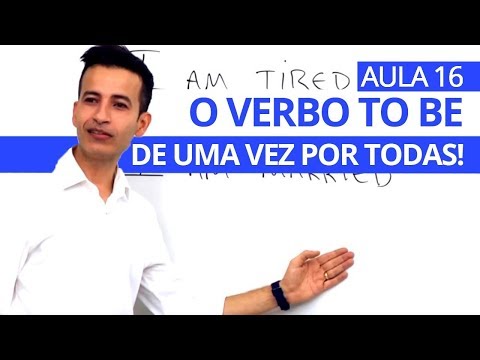
O VERBO TO BE DE UMA VEZ POR TODAS! AULA 16 - PROFESSOR KENNY
Venha ser meu aluno! https://curt.link/yt-desconto-curso 0:00 HELLO, PEOPLE! 0:05 CURTA O VÍDEO! 0:15 SE INSCREVA!
Conclusion
Mastering the verbo to be present empowers you to express states, locations, identities, and emotions with precision and confidence. By learning its forms, practicing contractions and negatives, and observing how it is used in real situations, you build a solid foundation for fluent English. With ongoing practice, the verb to be becomes a reliable tool that supports clear and effective communication every day.
