Sumário do Conteúdo
Understanding the difference between active voice and passive voice is essential for clear, confident writing.
What Is Active Voice and Why It Powers Your Writing
In active voice, the subject of the sentence performs the action, making your meaning direct and vivid. This structure naturally creates shorter sentences, stronger verbs, and a clearer connection between the doer and the action. Because the reader can easily identify who is responsible, active voice reduces ambiguity and keeps momentum in your paragraphs. Writers often choose active constructions to emphasize energy, accountability, and immediacy in both nonfiction and fiction.
From an SEO perspective, content written in active voice tends to score higher on readability tests, which search engines consider when evaluating user experience. Simple, active sentences load quickly in the mind and encourage visitors to stay longer on the page. You do not need to eliminate passive voice entirely, but building a habit of active statements will make your overall text more engaging. Tools like readability checkers often highlight passive-heavy sections, suggesting that you flip them into active constructions for better impact.
Consider these examples: "The team launched the new campaign yesterday" is active, while "The new campaign was launched by the team yesterday" is passive in structure. The first version feels faster and more confident, which is why marketing copy, news headlines, and instructional guides often favor the active pattern. By training your eye for the subject-verb-object rhythm, you can quickly revise wordy sections during editing. Over time, this becomes an automatic part of drafting, helping you produce content that sounds natural and authoritative.
The Role of Passive Voice in Formal and Scientific Contexts
Passive voice shifts the focus from the doer to the action itself or to the receiver of the action, which can be useful in certain situations. In academic writing, scientific reports, and technical documentation, passive constructions help maintain an objective tone by removing the researcher or technician as the central subject. For instance, saying "The solution was heated to 100°C" keeps the emphasis on the process rather than on who performed it. This distancing can lend a sense of neutrality and professionalism, especially when the actor is unknown or irrelevant.
In legal, medical, and official communications, passive voice can also soften impact or protect privacy when naming a specific individual is not appropriate. Sentences like "Mistakes were made" or "Measurements were taken at regular intervals" highlight the event rather than assigning blame directly. While some critics argue that passive voice can obscure responsibility, it has a legitimate place when you intentionally want to depersonalize the message. The key is to use it deliberately, understanding the trade-off between neutrality and clarity.
From an SEO and content marketing angle, overusing passive constructions can dilute your authority and make your prose feel flat. Search algorithms favor content that engages readers, and dense clusters of passive sentences often increase bounce rates because they require extra cognitive effort. To balance objectivity with readability, you might mix passive elements for formal sections while using active voice for headings, introductions, and calls to action. This hybrid approach maintains professionalism without sacrificing the energetic flow that keeps visitors engaged.
How to Identify Passive Voice in Your Text
Spotting passive voice is easier when you look for a few recurring patterns in your sentences. Typically, you will see a form of the verb "to be" combined with a past participle, such as "was written," "has been reviewed," or "will be completed." The subject either receives the action or appears after a prepositional phrase introduced by "by," which can be a clear signal that the construction is passive. If you can ask "by whom" or "by what" and find an answer in the sentence, you are likely dealing with passive voice.
Reading your draft aloud helps you detect clunky, indirect phrasing that may hide passive structures. Tools and browser extensions designed for grammar checking can underline potential passive sentences, but it is still valuable to understand the underlying logic. Train your eye by labeling a few example sentences in a notebook, noting whether the subject is acting or being acted upon. With practice, you will intuitively recognize wordy or evasive constructions and revise them into more direct alternatives.
Once you identify passive passages, ask whether the context truly requires that focus on the action or object. If the doer is important, consider flipping the sentence to active voice and specifying the subject. If the doer is unknown or intentionally omitted, you may keep the passive form but strengthen it with clearer context. This habit of questioning each construction ensures that your final text balances precision with the occasional strategic use of passive voice for stylistic effect.
Revising Passive Sentences Into Active Ones
Transforming passive into active voice usually involves moving the object to become the subject, placing the original subject after the verb or in a prepositional phrase, and using a more vivid verb. For example, "The report was completed by the intern" becomes "The intern completed the report," which is shorter and more energetic. You can also choose slightly different active structures that keep the emphasis you want while sounding more natural. The goal is not to eliminate every passive instance but to ensure each one serves a clear purpose.
During the editing stage, you might create a simple checklist to evaluate your sentences: Who or what performs the action? Is that information important to the reader? Does the current structure add clarity or obscure it? Answering these questions helps you decide whether to revise a sentence into active voice or leave it as passive. Over time, this reflective process strengthens your overall command of language and improves both your speaking and writing.
Search engines reward content that offers a smooth reading experience, so actively trimming unnecessary passive constructions can indirectly boost your rankings. Clearer sentences mean lower bounce rates and longer time on page, both of which signal quality to algorithms. By practicing consistent revision habits, you build a distinctive style that remains flexible enough to handle formal reports, conversational blog posts, and everything in between.
Balancing Both Voices for Maximum Impact
Rather than treating active and passive voice as strictly opposing choices, think of them as complementary tools in your writing toolkit. Active voice excels at driving narratives forward, making arguments persuasive, and creating memorable hooks for your introduction and key sections. Passive voice, when used thoughtfully, can provide the necessary distance for technical explanations or when the actor is less important than the action itself. The most effective content often moves smoothly between both modes depending on context.
Consider your audience and purpose: a startup product launch benefits from energetic active statements, while a detailed methodology section may rely partly on passive constructions to highlight procedures. Mixing the two voices intentionally keeps your rhythm engaging without sacrificing precision. By consciously choosing when to emphasize the doer and when to emphasize the action, you guide your readers through complex information with ease.
SEO best practices align with this balanced approach, as clear, reader-friendly content encourages sharing and return visits. Use active voice to power your headlines, subheadings, and key messages, and reserve passive voice for moments where objectivity or subtle emphasis is required. Regularly reviewing your drafts with an eye toward voice helps you refine tone, reduce ambiguity, and ultimately produce content that feels both authoritative and approachable.
Vídeos Relacionados
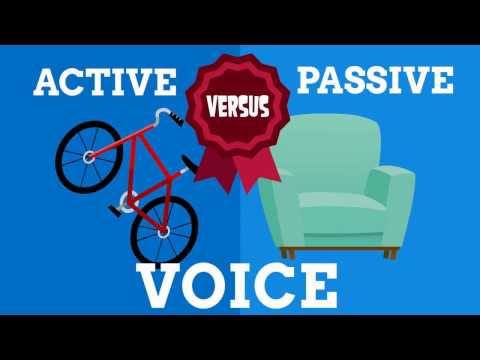
Active versus Passive Voice
This short video provides a brief introduction into the differences between active and passive voice when writing sentences.
Conclusion
Mastering the interplay between active and passive voice empowers you to write with precision, style, and purpose.
